

Introduction
Is AEC outsourcing the safety net your BIM team is missing when deadlines pile up? Most firms only ask that question after a key modeler leaves; big bid lands, or three projects peak in the same month.
Here is the problem. Many AEC firms depend on one in-house team, or on one outside vendor, for all their production work. When that single source slows down, the whole schedule slows down. Missed milestones, rushed submittals and tired staff follow.
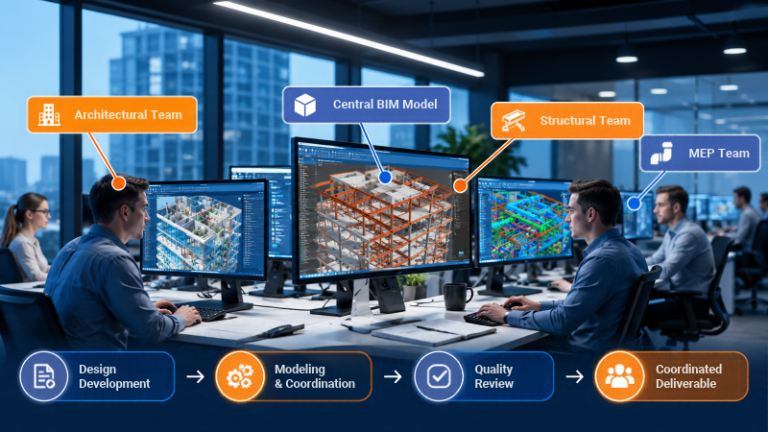
This blog explains how a smart multi-sourcing strategy fixes that risk. You will learn how to plan capacity, spread work across more than one source, and keep modeling quality steady. We use plain language and practical steps, so you can apply the ideas to your next project.
Why AEC Outsourcing Needs a Multi-Sourcing Strategy
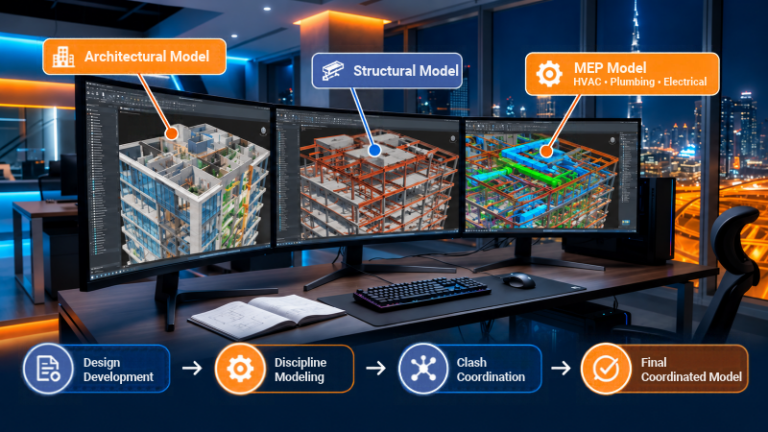
AEC outsourcing means handing part of your design, drafting, or modeling work to an outside team. It is common, and it works well. But relying on only one partner just moves the risk from your office to theirs.
Multi-sourcing solves this problem. Instead of one source, you build a small network of trusted sources. If one is busy, another can step in.
What Is a Multi-Sourcing Strategy in AEC?
A multi-sourcing strategy is a plan to share production work between your in-house team and two or more outside partners. Each source has a clear role. Each one can scale up when the others cannot.
Single Source vs. Multi-Source: A Quick Comparison
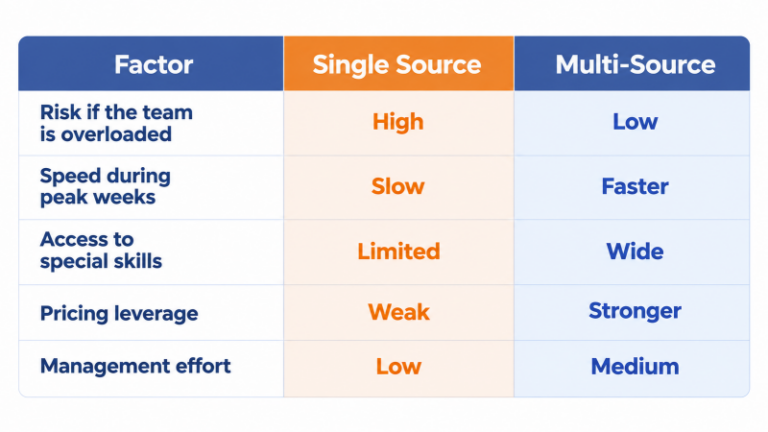
The trade-off is more coordination. The payoff is a steadier delivery. For most growing firms, that trade is worth it.
Why Outsourcing in Construction Keeps Growing
Outsourcing in construction has grown because skilled modelers and drafters are hard to hire and costly to keep. Project loads also swing from month to month. Fixed teams struggle with that swing, while flexible capacity handles it well. For a broader view of when outside BIM help makes sense, see this practical guide to BIM outsourcing services.
Capacity Planning in Construction: Spot the Gaps Early
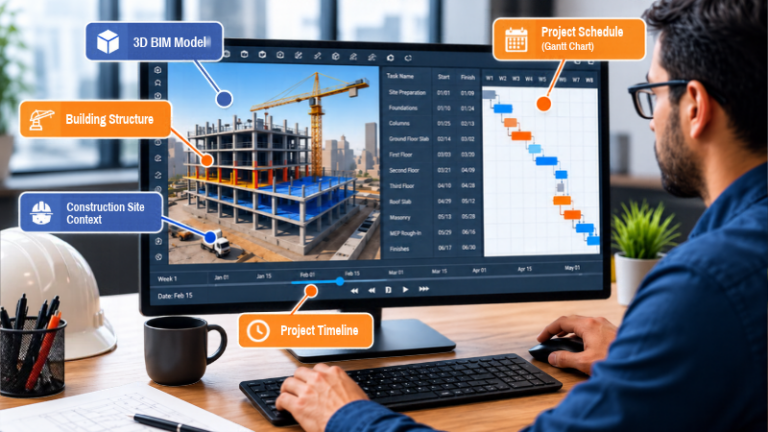
Good capacity planning in construction starts before the crunch, not during it. You cannot add redundancy if you do not know where your limits are.
Step 1: Measure Your Real Production Capacity
Count the hours your team can truly deliver each week. Remove meetings, training, leave, and rework. The number is usually lower than people expect.
Step 2: Use BIM Project Resource Planning
BIM project resource planning means matching each project phase to the people and hours it needs. Build a simple forecast for the next three to six months. Mark every week where demand passes capacity.
Step 3: Set Trigger Points
Decide in advance when you will call in for extra help. For example:
- Demand passes 85% of capacity for two weeks in a row
- A new project starts before the last one reaches its deadline
- A key team member will be away for more than a week
These triggers turn a panic decision into a normal process.
7 Proven Ways to Build Redundancy with AEC Outsourcing
Use these seven steps to build redundancy into your production and modeling capacity.
- 1. Keep a Core Team and Add a Flex Layer :Your in-house team owns design intent and client contact. Outside partners handle heavy production. This split protects quality and gives you room to grow.
- 2. Pre-Qualify at Least Two Outside Partners : Do not look for a partner when you are already late. Test two or three partners on small, real tasks first. Pick the ones that deliver clean files on time.
- 3. Use Scalable Design Support for Peak Weeks : Scalable design support lets you add people for a few weeks and release them when the rush ends. Many firms call this resource augmentation for AEC firms. You pay for output, not for idle seats.
- 4. Split Work by Discipline or Task :Send architectural work to one partner and structural or MEP work to another. Or split by task type, such as modeling versus drawing sets. This spreads risk and builds deep skill in each partner.
- 5. Standardize Templates, Standards, and Naming : Share one set of BIM standards, families, templates, and file rules with every partner. Aligning to a recognized framework such as the ISO 19650 information management approach make's handovers smooth. It also lets you swap partners without chaos.
- 6. Set Up Shared Review and Quality Checks :Use one review routine for every source. Check models for clashes, missing data, and drawing errors before they reach the client. A weekly call and a shared issue log are usually enough.
- 7. Track Performance and Rotate Work : Score each source on speed, accuracy, and communication. Give more work to the strongest and keep others warm with smaller tasks. That way, backup help is always ready.
Which Services Fit Multi-Sourcing Best?
Not every task suit outside help. These services usually split well across sources.
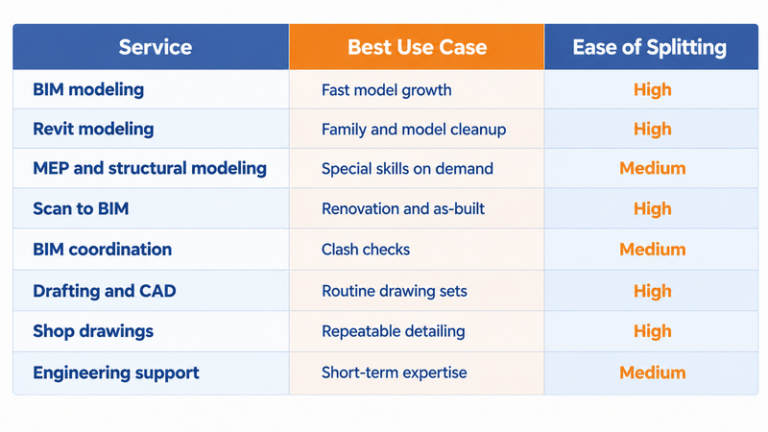
BIM Outsourcing and BIM Modeling Services
BIM outsourcing covers 3D model building, data setup, and updates. Strong BIM modeling services keep your models consistent across phases. This is often the first area where firms add backup capacity.
Revit Modeling Services
Revit modeling services help when your team already uses Autodesk Revit and needs more hands. Ask for family creation, model cleanup, and level-of-detail control. You can learn the tool basics on the official Revit product page.
MEP BIM Modeling Services and Structural BIM Modeling
MEP BIM modeling services and structural BIM modeling need special skills. Hiring those skills full time is costly, so a flexible partner often makes more sense.
Scan to BIM Services
Scan to BIM services turn point cloud data from site scans into usable models. They are ideal for renovation and as-built work. The work comes in bursts, so outside help is a natural fit.
BIM Coordination Services
BIM coordination services find clashes between trades before they reach the site. A neutral second team can add a fresh set of eyes and catch what the original modelers missed.
Architectural Drafting Services and CAD Drafting Outsourcing
Architectural drafting services and CAD drafting outsourcing handle plans, sections, and details. They free your designers to focus on design. This is also a safe way to test a new partner.
Architectural Production Outsourcing and Construction Document Outsourcing
Architectural production outsourcing covers the full push from design to submittal drawing sets. Construction document outsourcing speeds up the final packages that often cause deadline stress. For examples of what firms hand off, see this overview of architectural outsourcing tasks and benefits.
Shop Drawing Services
Shop drawing services support fabricators and contractors with detailed, build-ready submittal drawings. These tasks are repeatable, which makes it easy to share with partners.
Engineering Outsourcing Services and Outsourced Engineering Support
Engineering outsourcing services and outsourced engineering support add calculation, design, and review capacity. They help most when a project needs short-term expertise that you do not have in the office.
Quick Reference Table
How to Choose Partners and Avoid Common Risks
The right partner makes redundancy work. The wrong one adds to a new problem. Look at these areas before you sign up.
What to Check Before You Hire
- Sample work that matches your project type
- Software versions and standards they already use
- Clear quality control steps
- Data security and file handling rules
- Time zones overlap and response speed
- Willingness to start with a small paid pilot
Common Risks and Simple Fixes
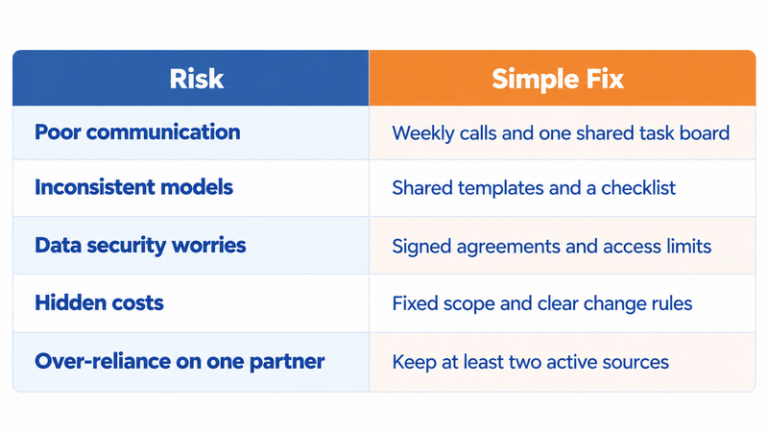
Communication problems cause more trouble than modeling mistakes. A podcast conversation on BIM outsourcing strategy and communication covers this point well from an industry view.
Need a Backup Capacity Before Your Next Deadline?
Multi-sourcing only works when your second source is ready before you need it. Contragenix AEC Design and Support Services works as an extension of your team, covering architectural, structural, civil, MEP and BIM modeling work. Every deliverable goes through a two-tier QA/QC review, and our engineering SME brings 36 years of experience to the table.
Conclusion
AEC outsourcing works best when it is part of a plan, not a rescue move. A clear multi-sourcing strategy, steady capacity planning in construction, and a few trusted partners let you absorb busy weeks without hurting quality.
Start small. Measure your real capacity, pick two partners, test them on a pilot task, and set shared standards. Within a few projects, you will have a production setup that bends instead of breaking.
Ready to add reliable backup capacity to your next project? Reach out to our team to discuss BIM, drafting, and engineering support that fits your workload.
Scale Your AEC Projects with Expert Design Support
Whether you’re managing multiple projects or facing resource constraints, our experienced engineering professionals seamlessly integrate with your team to provide accurate design, drafting, BIM coordination, and technical documentation, keeping your projects on schedule and within budget.